Glitzz india travel guides

At Glitzindia Travels we provide you all type of travel related services. We have strong Associations with leading hotels across the country, enables us to give our clients their best value for money. This trait of our, makes us the most attractive tour and travel agency for you. We are prompt in our replies to your queries, and this has earned us a reputation as one of the best and most efficient tour and travel operators in India by both our clients and our overseas partners.

Glitzz india Offers the Following Tours :

Cultural Tours in India:

Cultural Tours
Heritage Tours
Forts & Palace Tours
Fairs and Festival Tours
Adventure Tours in India

Trekking in Himalayas

Mountaineering Expeditions
Camel Safaris
Cycling Tours
River Rafting Trips
High Altitude Jeep Safaris
Bike Tours
Special Interest Journeys in India

Wild Life Tours

Archeological Tours
Tribal Tours
Photography Tours
Culinary Tours
Enlightenment Journeys in India

Ayurvedic Tours

Spa

Ayurvedic Treatments

Stress Busting Treatments

Religious Tours

Yoga & Meditation Tours | Yoga Classes ( With natural Environments)
Pilgrimage & Spiritual Tours
Recreation Holidays in India

Beach Tours
Mountain Tours
Hill Station Tours

Now you can have a comfortable and hassle free Holiday in India where in you leave all the worries to us. Right from the arrival at the airport to personalised assistance of departure, we take care of all the needs of the travellers. Our guests just sit back & enjoy their holidays with all the value for the money they have spent.

We provide :

Personalised assistance on arrival & departure.
All sorts of transfer from car to coach in any city in India.
Accommodation in all category of hotels from budget to 5 Star hotels all over India.
Multilingual guide services.
Escort services.
Air, train and bus tickets.
Sight seeing in comfortable chauffer driver cars to coaches.
Special cultural theme events if any.

24 * 7 Personal care taken from us towards our clients.

For any queries can always feel free to contact us:

Call: +91-9739920428

Mail: manju.198928@gmail.com

Showing posts with label Wildlife in India. Show all posts

Wildlife Lodges/Resorts in bandahavgarh national park


A number of jungle lodges and resorts function here. Equipped with all the modern amenities, these resorts are sure to give you a unique experience of stay.

  • Tiger’s Den
  • Bandhavgarh Jungle Lodge
  • Nature Heritage Resort
  • Tiger Trails Safari Lodge

What else to see and do? in bandhavgarh national park


  • The historical remains of the Kalchuri period are a must-visit for all. So, after you have done with your wildest of experiences, do remember to pay a visit to this pieces of history.
  • One of the biggest draws for visitors to the Bandhavgarh National Park, apart from the exotic species, is the Bandhavgarh Fort, dating back 2,000 years.
  • The PWD and the Forest Department run guesthouses inside the national park. Those who are looking for a uniquely wild experience can plan their stay here. 

Wildlife Species in Bandhavgarh National Park


A variety of sights and sounds await the visitors in the forests of the Bandhavgarh National Park. Bandhavgarh national park shelters a good number of both animal and bird species, a side from the reptile species. The possible sightings in the park include tiger, leoprad, gaur, spotted deer, sambhar deer, dhole, nilgai, sloth bear, wild boar, rhesus macaque, jackal, fox, wild dog, hyena, chausingha and ratel among others. Apart from the tigers of Bandhavgarh, other species that have attracted the attention of wildlife lovers include larger specimens of wild boar, sambhar deer and barking deer, observed anywhere in the country.


Besides watching and photographing the above-mentioned animal species, You can also enjoy observing numerous species of birds. Bandhavgarh national park has to boast around 250 avian species. Tourists can easily sight bird species like peacock, paradise fly catchers, Jungle fowl, golden and black headed orioles, yellow ioras, red-vented bulbuls, blue jays, purple sunbirds, green barbets and mynahs among others.

Bandhavgarh National Park


Known for its highest density of tiger population, Bandhavgarh National Park happens to be one of the most haunted wildlife havens in India. Bandhavgarh national park remains snuggled up in the Vindhya Ranges of the state of Madhya Pradesh. The total coverage area of the park measures 437 sq km. Bandhavgarh wildlife park served as the hunting preserve of the Maharaja of Rewa before being declared as a national park in the year 1968. The terrain of the park comprises rocky hill ranges, grassy swampland and wooded valleys. The low-lying area of the park is dominated by sal tress whereas the high-altitude areas have a mixed type of vegetation.

resortz in betla national park


The Forest Department runs rest houses for travellers. Besides, there are a number of private tourist lodges, cottages and hotels to cater to your needs.

* BSTDC’s Van Vihar
* Tree Houses

how to reach / travel for betla national park


Travel (Air/Rail/Road) Information
The closest airport from the Betla National Park is Ranchi, 180 km away. The airport at Ranchi has regular flights connecting to important Indian destinations like Kolkata, Patna, Mumbai and New Delhi. Daltonganj (25 km), which is also the nearest town, is the nearest railway station. Regular trains from the railhead connect to different parts of the country. Ranchi and Gaya are other major convenient railway stations located close to Betla. By road, the national park can be accessed from places including Daltonganj (25 kms) via Khudia morh (6km), Ranchi (140 kms), Hazaribagh (190 kms), Netarhat (211 kms), Patna (384 kms) and Kolkata (575 kms)..

What else to see and do? in betla national park


• Visit the historical monuments that the national park houses. Purana Quila and Naya Quila are important attractions for tourists. Though they are named the Old Fort and the New Fort, they seem to be built around the same time.
• Enjoy stunning views from the watchtowers and the ground hides that have been recently added to enhance the charm of wildlife spotting in the park.
• Other attractions that one must visit here include waterfalls and hot springs.
• Elephant rides into the jungle of Betla are a major draw for tourists visiting here.

Wildlife Species in betla Park


The vegetation of the Betla National Park ranges from tropical wet evergreen in the lower reaches and mixed deciduous forests in the middle to temperate alpine forests in the high altitude areas. Sal and bamboo trees cover a major portion of the national park while the river Koel along with its tributaries meanders through the northern part.

Due to a diversified ecosystem, the Betla National Park is home to a variety of animal species as well. The wildlife inmates include elephant, leopard, panther, jackal, monkey, Indian civet, chital, sloth bear, sambhar, nilgai, langur, mouse deer, porcupine and chinkara among others.

Birdlife of the Betla National is also quite rich. Bird watchers can enjoy the sights of avian species including rich featuring the hornbill, peafowl, red jungle fowl, black partridge, white necked stork, black ibis, swamp grey, pied born bill, wagtails, the harial, doves, drongo, the crested serpent-eagle, forest owls etc. Aquatic birds like teal, duck, snipe and geese can be easily spotted close to the Kamaldah Lake

Betla National Park in Jharkhand, india


Anyone been to Betla National Park in Jharkhand? I'm considering going for a few days but it's hard to find first person accounts about the place.There's a train from Gaya(I'll be in Bodh Gaya in March) to the nearest rail station at Daltonganj-3 or 4 hours)but it leaves about midnight and gets there in the middle of the night.Travel in that area seems difficult.Would I be crazy to take a daytime bus there?

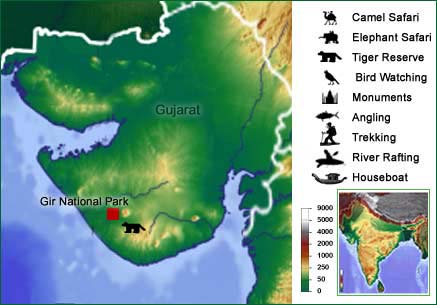
Distances from Major Cities to GIR national park

Veraval : 42 km


Keshod : 86 km


Delhi : 1140 km


Mumbai : 340 km


Rajkot : 160 km/3 hrs.


Ahmedabad : 415 km (SW)/7 hrs

Nearby Cities and How to get there

The historic town of Junagadh has a number of attractions that include forts, palaces and gardens. Shopping options in the town abound with ethnic Rajasthani goods finding the top spot on a shopper's list.

How to get there
By Air: Nearest airport is Keshod, while it will be ideal to travel by air to Rajkot and take a bus or taxi from here. Another major airport is Ahmedabad, connected to Delhi through daily flights (6:00 and 18:15). Indian Airlines flies Mumbai-Ahmedabad twice a day (5:30 and 19:30)

By Rail: The nearest railheads are Sasan Gir and Veraval, while the most convenient railway station is Rajkot. Delhi is connected to Rajkot through the Sarvodaya Exp. (Dep. 21:55, Monday), Jat Jamnagar Exp. (21:55, Sun), Dee Porbandar Exp. (8:25, Mon, Thu) and Uttaranchal Exp. (13:40, Sun). Daily trains plying between Mumbai and Rajkot include the Saurashtra Mail (20:25), Sau Janata Exp. (8:00) and Saurashtra Exp. (7:55). Another railhead is Junagadh, connected to Ahmedabad through the Jabalpur Exp. and Somnath Exp.

By Road:State Transport buses are available from Junagadh and Veraval between November and June. To reach the park from Ahmedabad, take the NH8A to Chotila via Bagodra, Limbdi and Sayla, NH8B to Jetpur via Rajkot and Gondal, NH8D to Junagadh via Vadal. From here, take the district road to Sasan Gir via Khadia and Mendarda. Volvo buses run between Ahmedabad and Junagadh (Rs. 200/head). From there a mini bus will take you to Sasan Gir.

Safaris in gir national forest


Jeep Safaris are an ideal way to travel inside the park, as the uneven terrain of the park can be conveniently covered on a sturdy vehicle. The park authorities permit you to take your own vehicle inside the park but only with the addition of a park guide. Jeeps can also be hired from the office at Sasan or from the tour operators. Seats should be booked in advance for a ride on the mini bus operated by the park administration. The safari timings are 6:30 to 9:30 AM and 3 to 5 PM.
Organic "Safari Friends" Coverall

Avian Population in gir national park

The forest is also rich in bird life, with an estimated 300 species inhabiting the Gir National Park. Many wildlife experts believe that had Gir not been a Lion sanctuary, it could have easily passed off as a protected area for the incredible diversity of birds that it harbors. The avifauna here occupies the forest floors, small plants and shrubs and even the canopy of the trees. The Paradise Flycatcher, Black Headed Cuckoo Shrike, Pied Woodpecker, Bonelli's Eagle, Creset Serpant Eagle, Painted Sandgrouse, Bush Quail and Grey Patridge are the commonly found varieties in the park.

Reptiles in gir forest


Not leaving the water predators behind, Mash crocodiles are often seen along the Kamleshwar Dam Site. Another major attraction among the reptile population of Gir National Park are the numerous non-venomous Snakes such as the Indian Rock Python along with the four venomous varieties of Indian Cobra, Common Krait, Saw Scaled Viper, Russell's Viper. Among the lesser-known wildlife of Gir National Park includes the most common animal that can be sighted in the sanctuary, the Chital or Spotted Deer. Other main wild attractions are Nilgai, Chinkara, Sambhar, Black Bucks, the four horned Antelope, Wild Boar, Indian Flying Foe, Grey Musk Shrew, Indian Hare, Pale Hedgehog, Small Indian Mangoose, Small Indian Civet, Indian Pangolin, Indian Porcupine, Ratel, Indian Fox, and Jackal. The three smaller wildcats - the Jungle Cat, Desert Cat and the Rusty Spotted Cat also inhabit the forest, a fact which shows that the forest is not just meant for the protection of Lions, but the entire cat family.
Eyewitness: Reptile

The Leopards in GIR forest


Leopard is considered to be one of the most beautiful and graceful animals in the jungle, also the most dangerous one. Popularly known as the Prince of Cats, this animal is the most adaptable among the predators, one of the reasons why it occupies a much larger spread of Gujarat forest cover. In the Gir National Park it is found in all the varied habitats and vegetation types. The approximate population of 210 Leopards resides within the sanctuary area.

Wildlife Attractions in Gir National Park


A distinct belt of vegetation is found along the main rivers and streams. Species like the Jambu, Karanj, Umro, Vad, Kalam, Charal, Sirus and Amli are mainly found here. These trees are mostly broad leaved and evergreen, giving the area a cool shade and the moisture content. Finally, Prosopis and Casuarina have been planted in the coastal borders as part of the afforestation plan.
Gir National Park & Sanctuary: Bibliography

about GIR national park


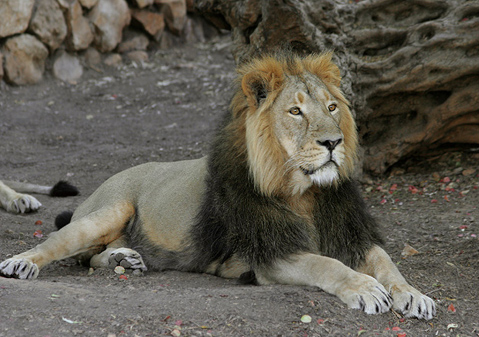
Gir is the only home in India for the Asiatic Lion of which there are nearly 300 in the park. The Gir National Park lies in the Gujarat peninsula in South-Western India. The terrain is rugged with low hills and the vegetation is mixed deciduous, with stands of Teak, Acacia, Jamun, Tendu and Dhak trees, interspersed with large patches of grasslands. The trees on the hills are sparse and stunted.

Within the sanctuary, there are numerous human settlements of cattle herders called Maldharis with an estimated 20,000 head of livestock (which, incidentally, forms a significant part of the Lion’s diet). There are also places of Hindu worship and pilgrimage and sulphur springs at Tulsi Shyam and Kankai Mata. The edges of the park have good population of Indian Gazelle, protected by religious sentiments of the local people.

DON'TS & Useful Tips on the Yatra,

1.    

Do not overstrain on steep gradients.
2.    

Do not relax at points where there are warning notices.
3.    

Do carry some eatable like biscuits, candy, milk powder, sugar, assorted dry fruits, honey and some tinned food with you. Also carry water bottle, plastic plate, tumbler, Spoons, etc.
4.    

Do not pay more than the prices/rates fixed for porters, ponies, dandies, rations firewood, accommodation etc. Note:-
Aged, infirm, ailing, and insufficiently clothed persons will not be permittedto proceed beyond Pehalgam. No Yatri will be allowed without aregistration card.
  

Useful Tips on the Yatra

The Yatra is organised by the Jammu & Kashmir Govt., in the month of Shravan, and commences mainly from Pahalgam on specified dates. In recent years the route from Baltal has also been thrown open for the pilgrims to approach the holy Cave.

Dress: Pilgrims are advised to carry sufficient wollens such as sweaters, drawers, wollen trousers, monkey cap etc. Other items could include wind cheaters, rain coat, sleeping bag or blankets, umbrella, waterproof boots/shoes, walking stick, torch etc. Ladies are advised not to go on the trek in saris, instead pants or Salwar suits with drawers should be used.

Medical Assistance: Medical posts manned by qualified doctors and nursing staff are established enroute to cater to the needs of the pilgrims, free of cost. However, pilgrims are advised to carry along any medicines specifically prescribed for them.

Provisions: Essential rations are available at fair price rates from the specially established Govt. Depots at Chandanwari, Sheshnag and Panchtami, Numerous wayside tea-shops and small restaurants are set up by private parties. However, pilgrims are advised to carry with them biscuits, toffees, tinned food etc. to cater to their immediate needs. Firewood or gas can be obtained at Chandanwari, Sheshnag (Wawajan), Panchtami and near the Cave.

Insurance: In view of the hazardous nature, pilgrims are advised to insure themselves before proceeding on the Yatra.

Accommodation: Good tented accommodation with allied facilities are set-up during the Yatra period. These are provided on the basis of payment of fixed rates

Registration: Registration of pilgrims is undertaken about a month ahead of the date fixed for commencement of Yatra

The Yatra is organised by the Jammu & Kashmir Govt., in the month of Shravan, and commences mainly from Pahalgam on specified dates. In recent years the route from Baltal has also been thrown open for the pilgrims to approach the holy Cave.

Dress: Pilgrims are advised to carry sufficient wollens such as sweaters, drawers, wollen trousers, monkey cap etc. Other items could include wind cheaters, rain coat, sleeping bag or blankets, umbrella, waterproof boots/shoes, walking stick, torch etc. Ladies are advised not to go on the trek in saris, instead pants or Salwar suits with drawers should be used.

Medical Assistance: Medical posts manned by qualified doctors and nursing staff are established enroute to cater to the needs of the pilgrims, free of cost. However, pilgrims are advised to carry along any medicines specifically prescribed for them.

Provisions: Essential rations are available at fair price rates from the specially established Govt. Depots at Chandanwari, Sheshnag and Panchtami, Numerous wayside tea-shops and small restaurants are set up by private parties. However, pilgrims are advised to carry with them biscuits, toffees, tinned food etc. to cater to their immediate needs. Firewood or gas can be obtained at Chandanwari, Sheshnag (Wawajan), Panchtami and near the Cave.

Insurance: In view of the hazardous nature, pilgrims are advised to insure themselves before proceeding on the Yatra.

Accommodation: Good tented accommodation with allied facilities are set-up during the Yatra period. These are provided on the basis of payment of fixed rates

Registration: Registration of pilgrims is undertaken about a month ahead of the date fixed for commencement of Yatra

Travel Tips/Important Information to eravikulam

» The park receives plenty of rainfall and the tourists should be prepared     for rainfall any time of the day.

» Entry tickets can be purchased from the Rajamallay checkpost, about 5     km from the main road.

» After purchasing the tickets, the visitors can walk along the road till the    core area, where tourist entry is not permitted.

» Some of the park charges include Entry fee : Rs. 15 (Indians) & Rs. 200  (foreigners), Vehicle entry : Rs. 200 (heavy vehicles), Rs. 50 (light   vehicles) & Rs. 25 (other vehicles), Camera : Rs. 25 (still) & Rs. 200    (video)

» Avoid littering in the place, especially non biodegradable material like     polythene bags, which can even lead to the death of animals.

How to reach eravikulam national park

By Air : Kochi is the nearest airport. Indian Airlines connects the place with regular flights from Delhi (8:00, Daily), from Mumbai (11:05, Daily), (15:45, Mon, Tue, Thu, Sat), from Bangalore (12:45, Daily) and Chennai (12:55, Mon, Fri), (14:40, Wed, Fri, Sun), (18:30, Tue, Thu, Sat).

By Rail : Ernakulam is the nearest railhead, connected to Delhi : Mngla Lksdp Exp. (9:55), Kerala Exp. (11:30), Mumbai : Mngla Lksdp Exp. (8:50), Kanyakumari Exp. (15:45), Netravati Exp. (11:40), Bangalore : Kanyakumari Exp. (22:00) and Chennai : Dnh Allp Exp. (3:50), Tata Allp Exp. (3:50), Trivandrum Mail (20:00), Alleppey Exp. (21:15), Ms Guruvayur Exp. (7:25).

By Road : To reach the place from Kochi, take the NH49 to Munnar from where a state road leads to the Eravikulam National Park. Alternately to access the park from Coimbatore, take the NH209 to Udumalpet via Pollachi. From here, follow the state road to Eravikulam via Amaravathy.